
Home Contact Sitemap

Thank You

Thank you for visiting the Christmas Tree Farmers of Ontario website and supporting the Environmentally Friendly symbol of Christmas. Please return next fall for more Real Christmas Tree information.

Harvest Your Own

Harvest Your OwnFind the Harvest Your Own Christmas Tree Farm nearest to you. Read more..

Wholesale

WholesaleRetailers: Find a CTFO wholesale supplier in your area. Read more..

Holiday Helpers

Holiday HelpersUseful tips around the festive season. Read more..

Earth One

Earth OneThe Christmas Tree Farmers of Ontario environmental web section Read more..

Members Only Login

CTFO members log in the the Members Only section: Click here.

Scots Pine (Pinus sylvestris)

Scots Pine (Pinus sylvestris)
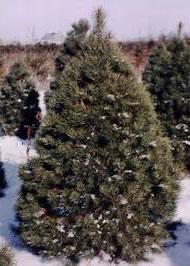
Scots Pine (Pinus sylvestris)

© CTFO

The Scots pine, which is the most popular Canadian Christmas tree, is not a native of North America. In spite of its name the Scots pine is found throughout Europe and Asia. Introduced to Canada by Christmas tree farmers, it can now sometimes be found growing in the wild. The Scots pine is a thick, hardy tree that holds its needles well over the holidays. Trees grown on a farm respond well to pruning and grow in well-rounded conical shapes with few breaks in the foliage.

Characteristics

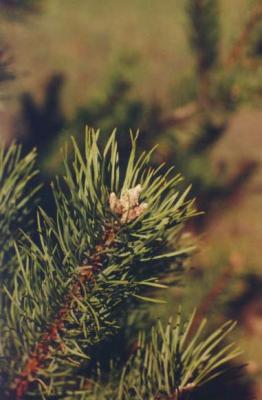
Scots Pine Branch

Scots Pine branch

© CTFO

The colour of a Scots pine is variable; some trees may be blue-green while others are yellow-green. The needles appear in clusters of two, are usually twisted and are about four to eight centimeters long. The bark on the upper portion of the stems is orange or orangeish-brown and is smooth to the touch. Closer to the trunk it is a greyish or reddish-brown and the trunk is often fissured in scaly plates. The cones grow both singly and in groups of two to three and are up to eight centimeters long. They are usually yellow-brown and contain tiny prickles on the cone scales.

 
Next: White Pine